A wild cat can be playful, watchful, still or elusive. This selection from our Winter Exhibition brings together six artists and a range of mediums, from watercolour and oil to coloured pencil and cast slate. Each gives us a different reason to stop and look.
Innocence by France Bauduin S.O.F.A.
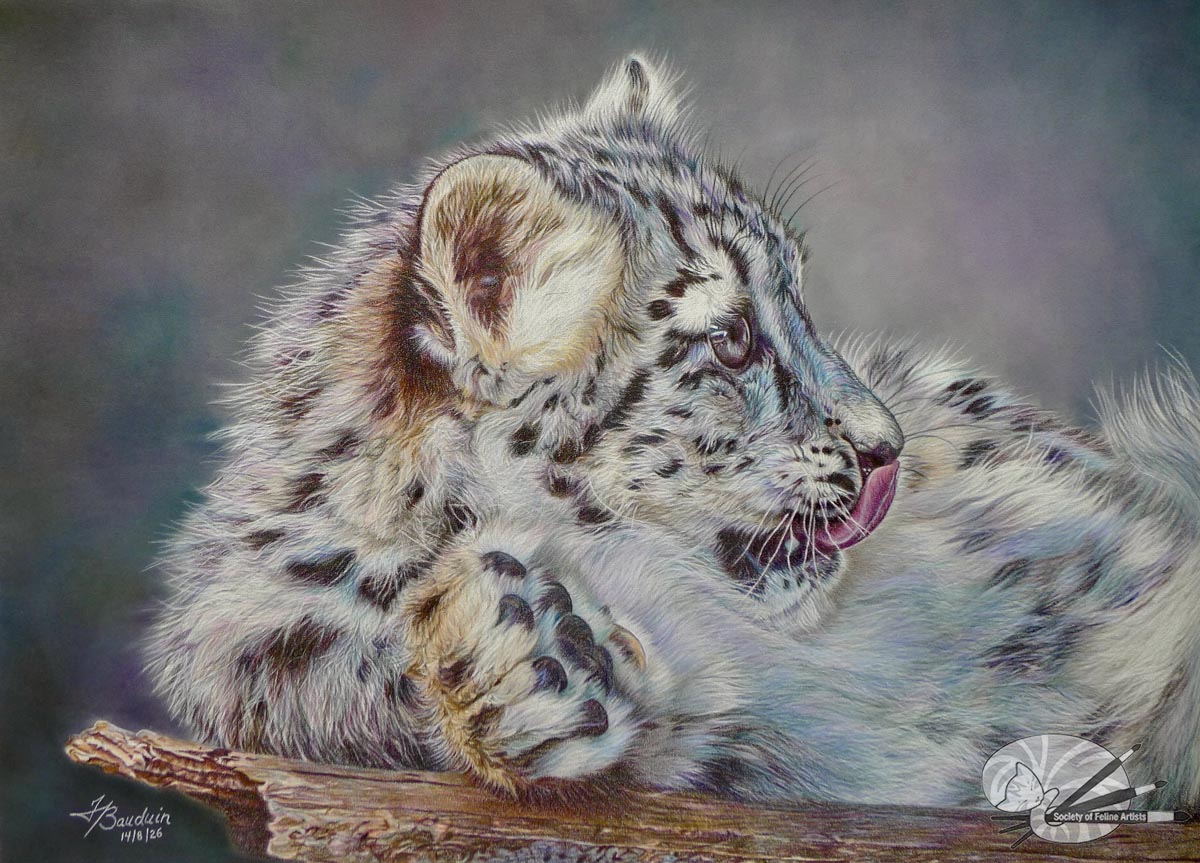
France Bauduin S.O.F.A. finds an unguarded moment in a snow leopard cub’s lifted paw and curling tongue. Coloured pencils and PanPastels allow close attention to soft fur and markings, while the gesture makes this youngster feel like a particular individual.
Serval in grass by Sarais Crawshaw S.O.F.A.
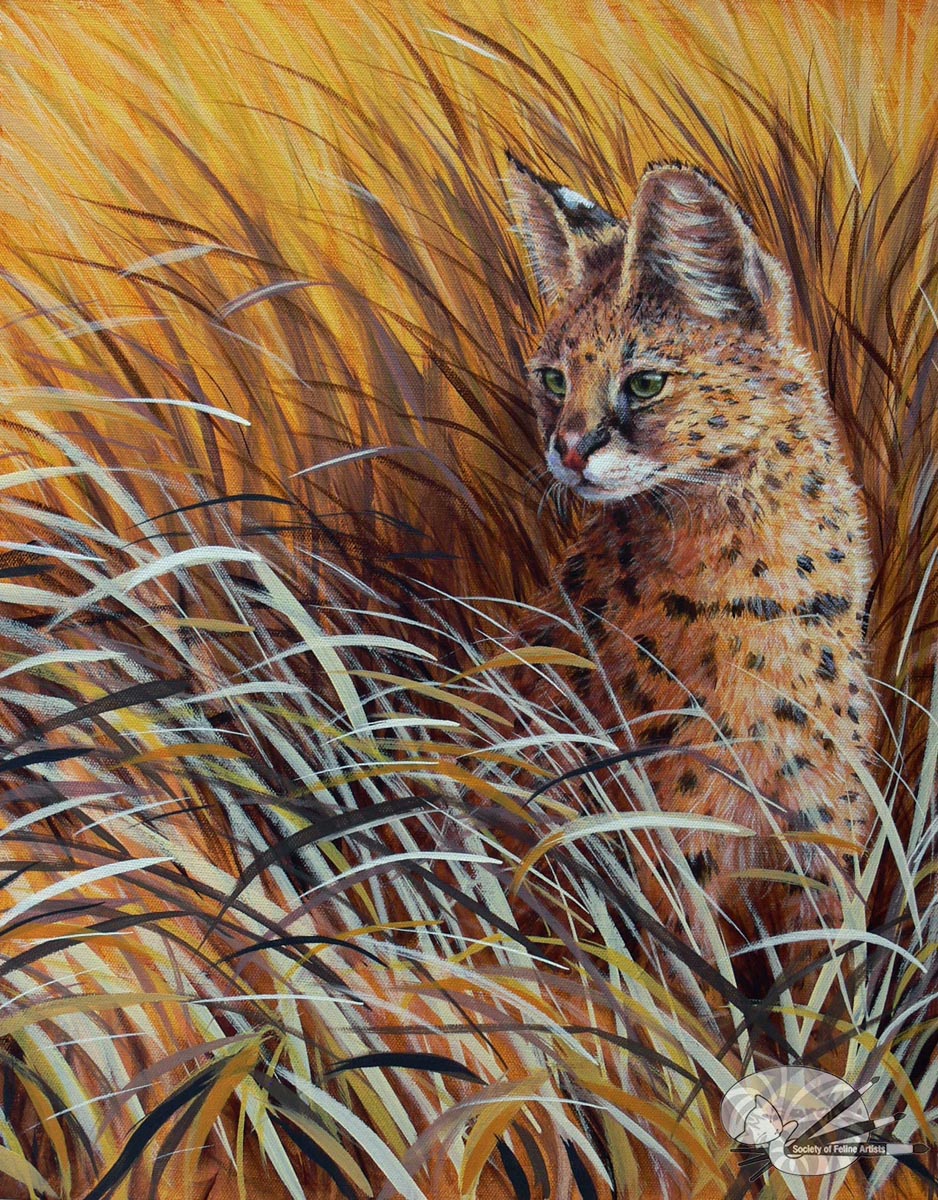
Sarais Crawshaw S.O.F.A. places a serval among golden stems. Acrylic on canvas brings the patterned coat into conversation with the lines around it, so that finding the face becomes part of the pleasure of looking.
Leopard at Kew by Patricia Clements S.O.F.A.
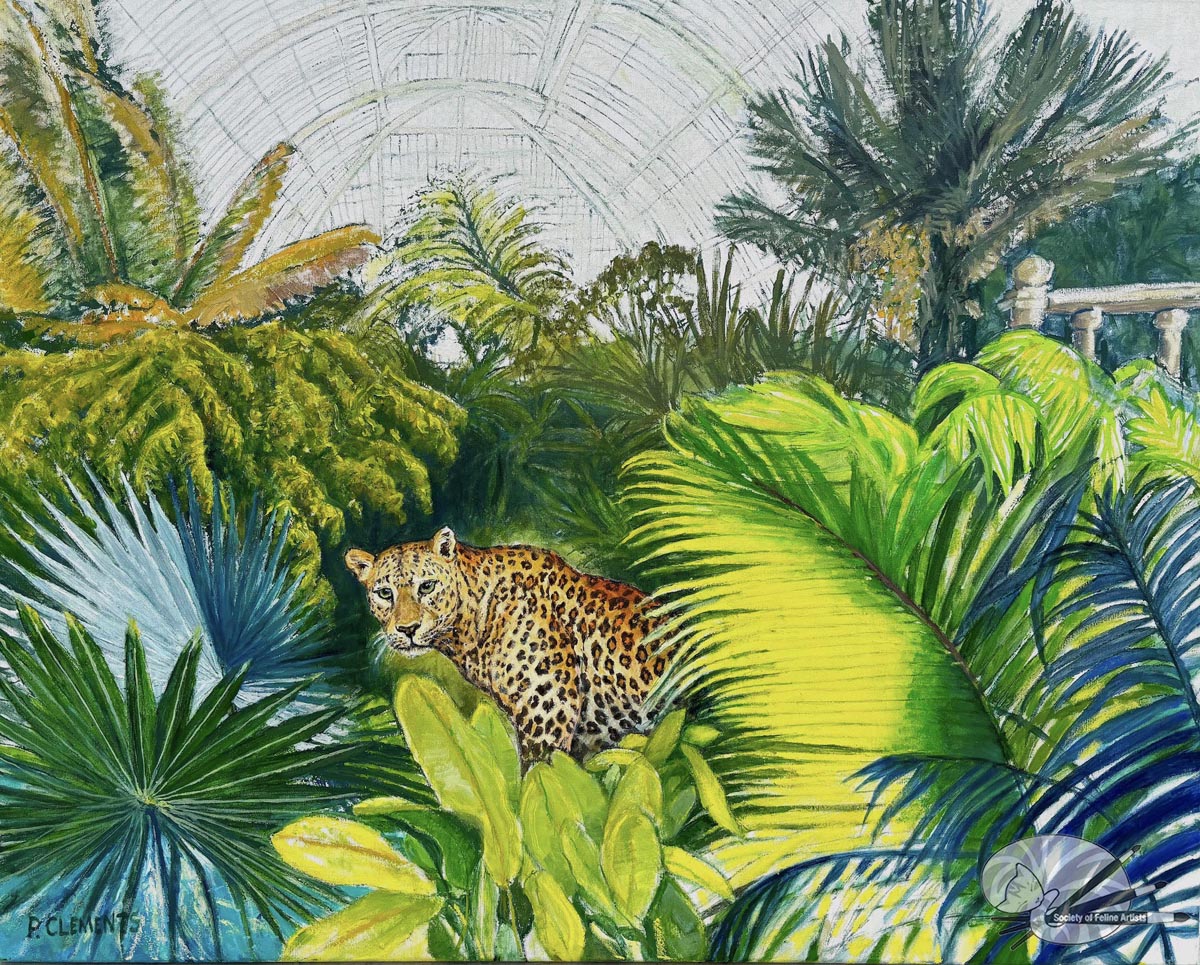
Patricia Clements S.O.F.A. surrounds a leopard with luxuriant foliage in oil on canvas. Her concern for endangered animals and plants connects the creature with its surroundings, giving the painting a wider environmental meaning.
Mirrored Beauty by Helen Turkdogan
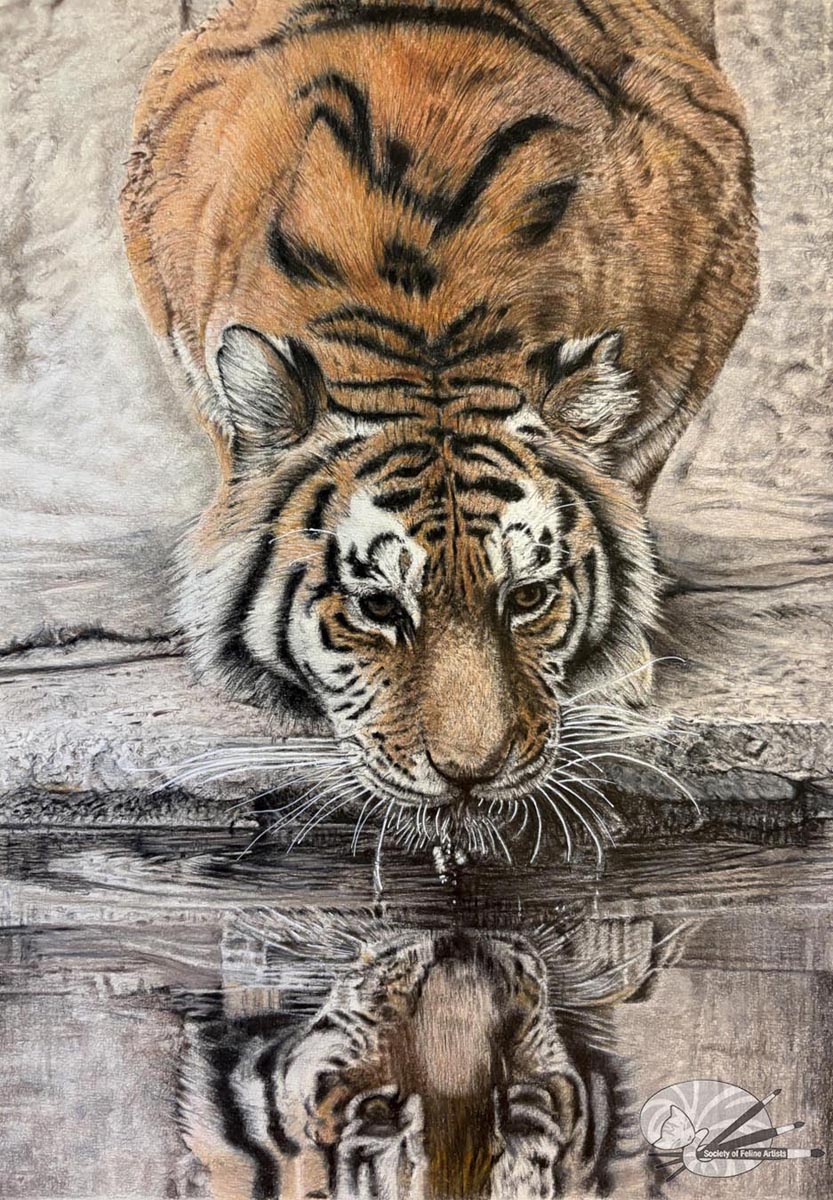
Helen Turkdogan draws a tiger and its reflection in coloured pencil. The meeting of a solid animal and its changing image in water creates a contrast of strength and fluidity, rewarding attention to the ripples as well as the face.
Poised by Lucy d’Auvergne
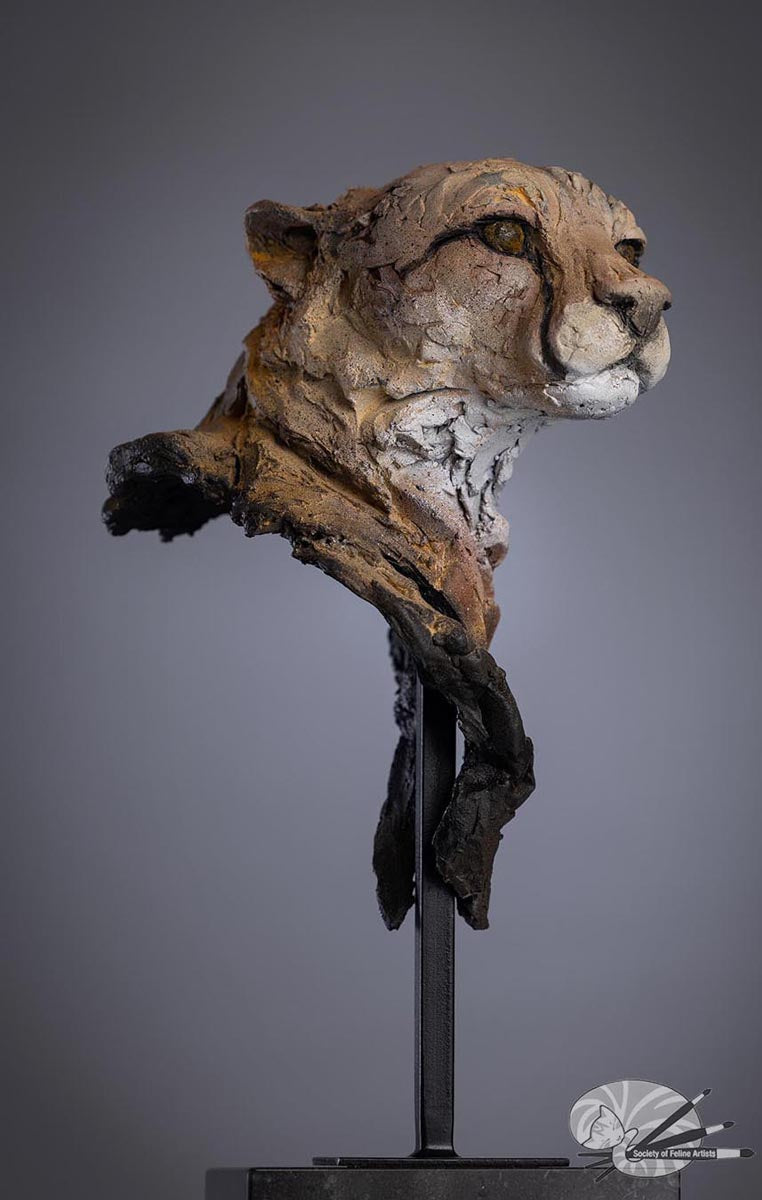
Lucy d’Auvergne returns to the memory of Kike, a cheetah she filmed in Kenya. Cast slate and raw Earth pigments preserve a sense of individuality and stillness, inviting us to think beyond the animal’s famous speed.
Blurred Borders by Martli Heyns
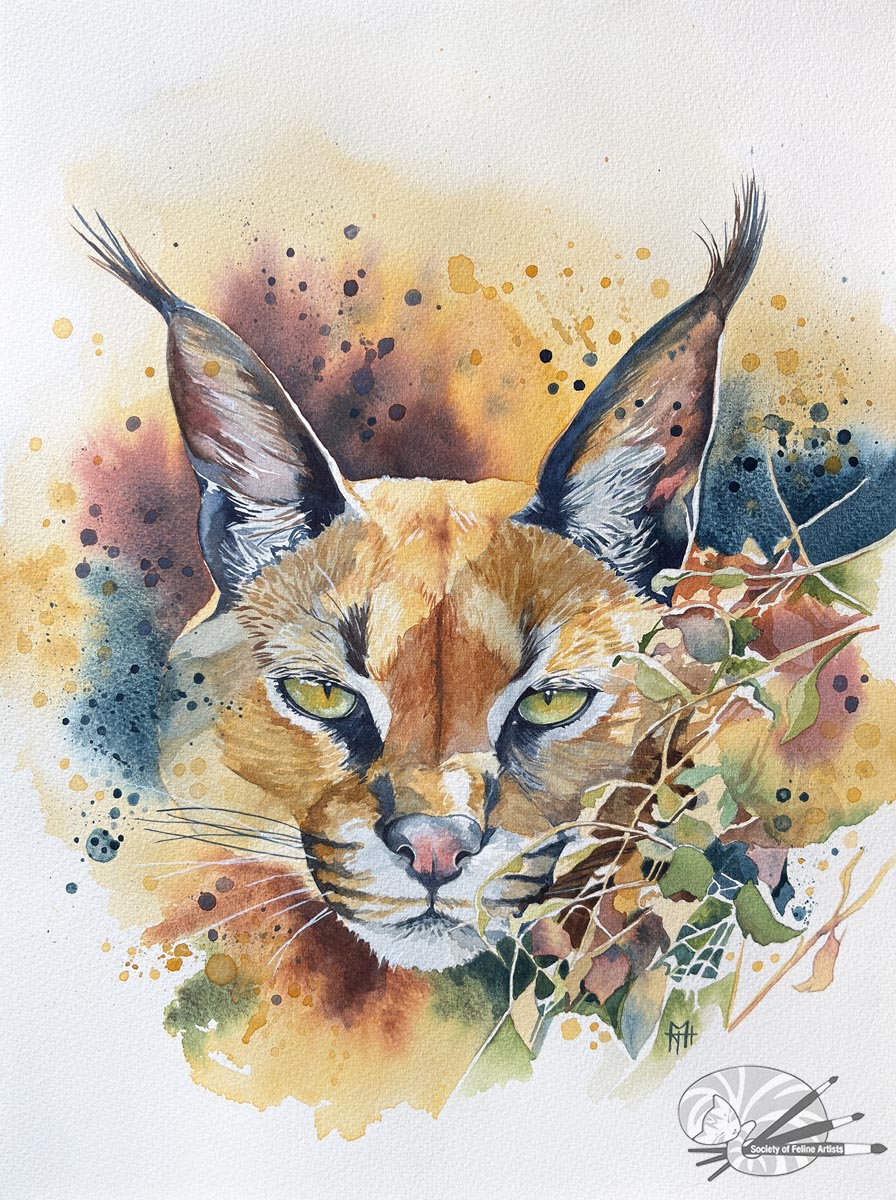
Martli Heyns uses a caracal portrait to consider the edges between wild and built environments. Loose watercolour and plant forms frame a closely observed gaze, opening a question about the room people leave for wildlife.
Seen together, these works show how many stories a wild-cat subject can hold. Follow the medium that interests you, or simply start with the face that makes you want to know more.

