It is a hilarious rabbit hole to fall down. If you look at cat portraits from the late Middle Ages through the early Renaissance, you’ll notice they rarely look like the cute, fluffy companions we know today. Instead, they often look like tiny, disgruntled men in cat suits, or strange, elongated gargoyles with unsettlingly human eyes.
Why did historical artists struggled so much with the feline form?
Imagine you are a world-class Renaissance painter. You’ve mastered the golden ratio, you’ve dissected cadavers to understand human musculature, and you can paint a cathedral ceiling that makes people weep. Then, a wealthy patron asks you to include their pet cat in a portrait. The result? A creature with the face of a middle-aged accountant and the body of a wet noodle.
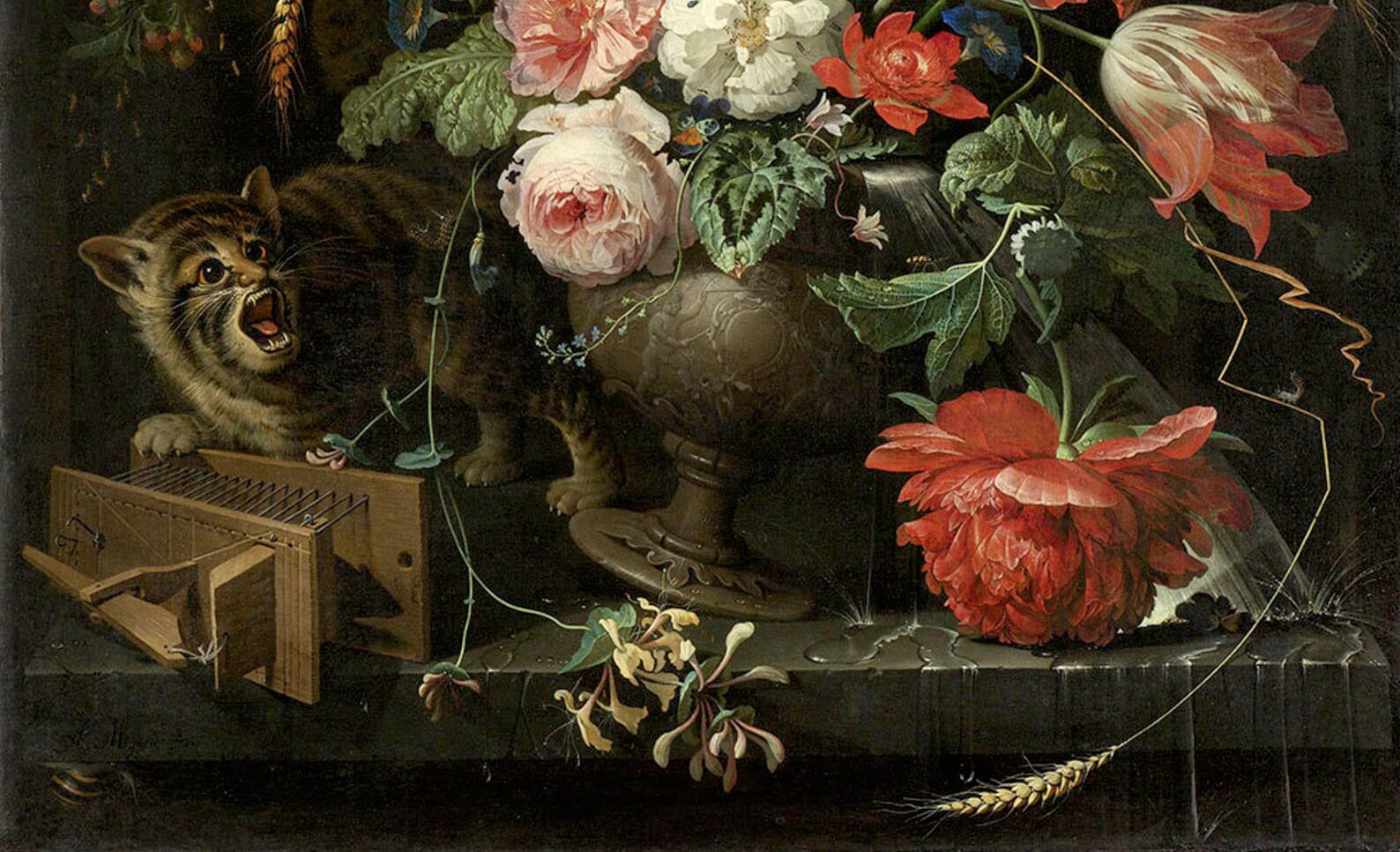
1. The “Miniature Human” Complex (Anthropomorphism) In the Renaissance, art wasn’t just about what you saw; it was about what things meant. Humans were the “pinnacle of creation,” so artists often struggled to view animals as anything other than hairy versions of ourselves. Painters applied human facial proportions, placing the eyes too close together and giving cats a defined bridge of the nose. In reality, a cat’s nose is a small “button,” and their eyes are massive globes set further apart.
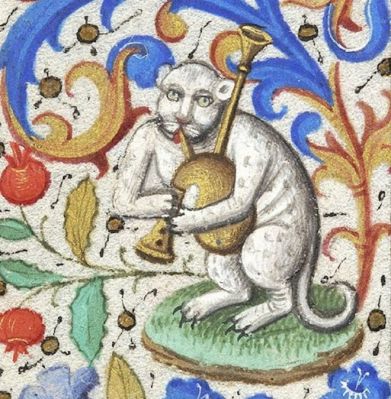
2. The Liquid Anatomy Problem (Physics vs. Paint) Cats are basically “liquid.” Their skeletal structure is hidden by fur and a highly flexible spine, making their proportions shift constantly.
Renaissance artists were obsessed with linear perspective and proportion. Trying to apply those rigid rules to a creature that can turn into a literal loaf or a long noodle proved to be a mathematical nightmare for painters used to drawing static marble statues
The Skeleton Mystery: A cat’s collarbone isn’t attached to its other bones (it’s buried in muscle), allowing them to squeeze through any gap their head fits through. Renaissance painters, used to the rigid skeletal structure of humans and horses, tried to give cats “shoulders” and “hips” that simply don’t exist in the same way.
The “Loaf” vs. The “Long”: A cat can change its surface area by 50% in seconds. To an artist trained in static proportions, a cat’s ability to transition from a compact ball to a long, spine-stretching noodle felt like a glitch in reality.
Not a problem for artists today!
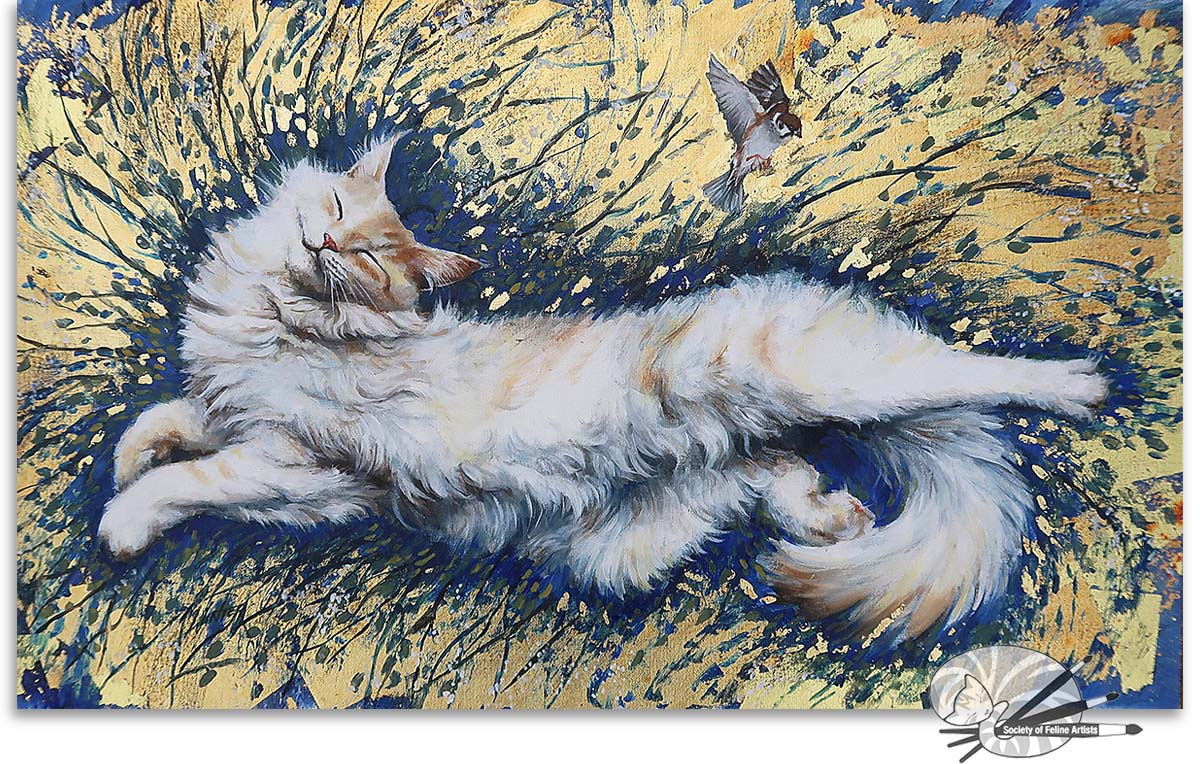
 Society Of Feline Artists